Macaroon vs Macaron: What’s the Difference?
Have you ever searched for a macaron recipe but accidentally found a coconut macaroon instead? The names look almost identical, making it easy to confuse these two popular desserts. However, Macaroon vs Macaron is a comparison between two cookies that differ in their typical ingredients, appearance, texture, and preparation.
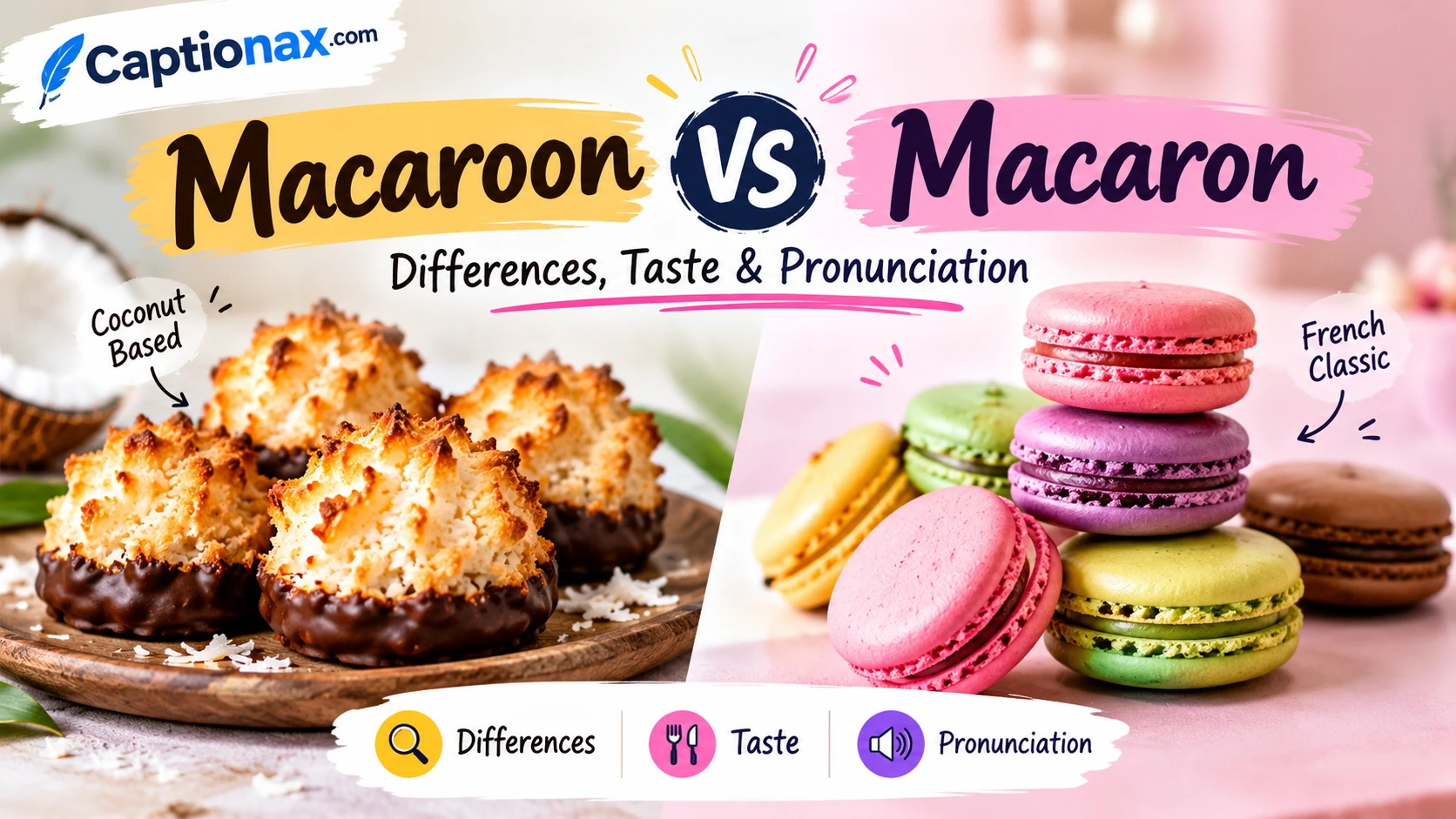
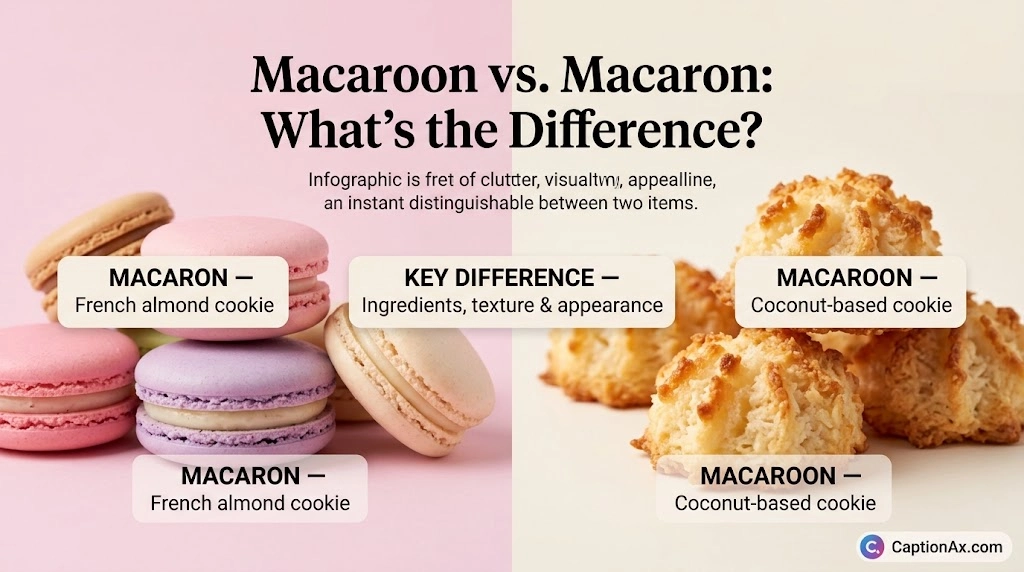
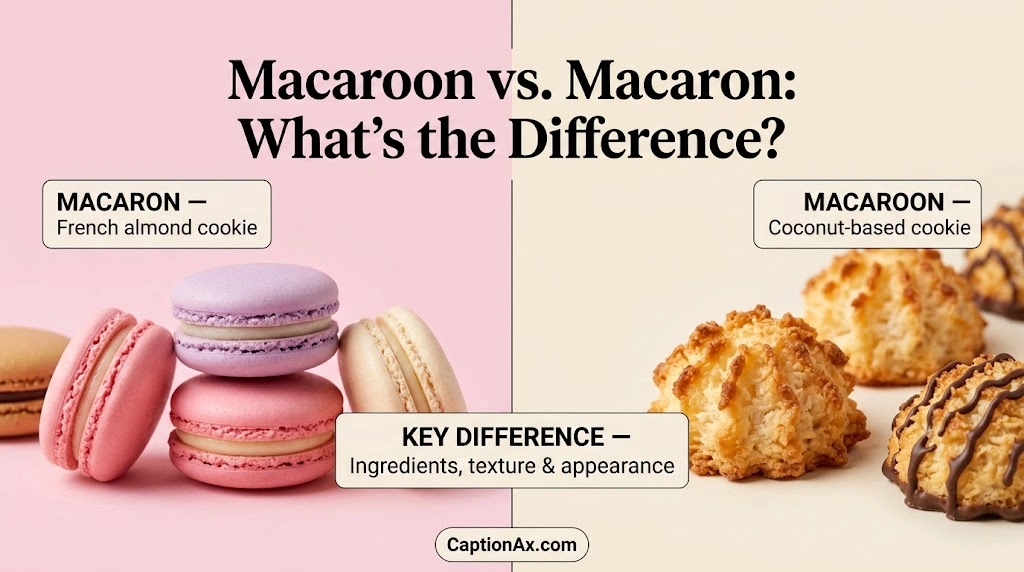
A macaron is usually a colorful French-style sandwich cookie made from almond flour, egg whites, and sugar, with a filling such as buttercream or chocolate ganache. A macaroon is commonly a chewy, coconut-based cookie shaped into a small mound.
The easiest spelling trick is to remember that macaroons have two “o”s, just like coconut. Although both cookies have historically related names, they have developed into distinct desserts.
Understanding the difference helps you choose the right recipe, order the dessert you actually want, and avoid confusing the two terms in everyday writing.
What Does Macaroon vs Macaron Mean?
The phrase macaroon vs macaron asks about the difference between two similarly named cookies.
- Macaron: A delicate, usually round sandwich cookie made with almond flour and meringue, commonly filled with cream, ganache, or jam.
- Macaroon: A cookie commonly made with shredded coconut, a sweetener, and a binder, producing a moist and chewy texture.
These are the most familiar modern meanings in English. Some traditional macaroon recipes contain almonds, so the distinction is not an absolute ingredient rule.
Macaroon vs Macaron: Quick Comparison
| Feature | Macaron | Macaroon |
| Spelling | One “o” | Two “o”s |
| Pronunciation | Mack-uh-ROHN | Mack-uh-ROON |
| Main ingredient | Almond flour | Usually shredded coconut |
| Shape | Smooth, round shells | Rustic mounds |
| Texture | Delicate shell, chewy center | Dense and chewy |
| Filling | Usually filled | Usually unfilled |
| Difficulty | More technique-sensitive | Often easier |
| Common flavors | Pistachio, raspberry, chocolate | Coconut, chocolate, almond |
What Is a Macaron?
A macaron is a French-style pastry consisting of two delicate almond-based shells joined by a filling. Its smooth surface, colorful appearance, and characteristic ruffled edges make it recognizable.
Common ingredients include almond flour, egg whites, sugar, and powdered sugar. Fillings can include chocolate ganache, buttercream, fruit jam, or flavored creams.
Macarons are available in flavors such as vanilla, pistachio, raspberry, lemon, coffee, and salted caramel. They are often served at weddings, celebrations, afternoon tea, and special occasions.
What Is a Macaroon?
A Macaroon is commonly a small coconut cookie with a golden exterior and a moist, chewy center.
Many recipes combine shredded coconut with sugar and egg whites. Others use sweetened condensed milk, vanilla, or additional ingredients. Some versions are dipped in chocolate.
Unlike a typical macaron, a coconut macaroon does not require two shells or a separate filling. Its distinctive flavor and texture come primarily from the coconut.
How to Pronounce Macaron and Macaroon
The two words have similar beginnings but different endings.
- Macaron: Commonly pronounced “mack-uh-ROHN.”
- Macaroon: Commonly pronounced “mack-uh-ROON.”
Pronunciation varies somewhat by accent and language. In English, however, the final sound provides a useful clue when ordering from a bakery.
Why Are Macaron and Macaroon Spelled Differently?
The words are historically related, but modern English uses them to distinguish different types of cookies.
The word macaron is associated with the French pastry tradition, while macaroon commonly refers to the coconut-based cookie. Their shared linguistic history helps explain why the names look so similar.
A practical memory trick is to associate the two “o”s in macaroons with coconut. Remember that this is a spelling aid, not a strict rule about ingredients.
Macaron vs Macaroon: Taste, Texture and Ingredients
Macarons usually have a delicate shell and a slightly chewy interior. Their filling can add creaminess, fruitiness, chocolate richness, or a contrasting flavor.
Coconut Macaroons are typically denser and chewier, with a recognizable coconut flavor. Toasted edges or a chocolate coating can add further depth.
Choose a macaron if you enjoy delicate pastries with varied fillings. Choose a coconut macaroon if you prefer a rich, chewy cookie.
The History and Origin of Macarons and Macaroons
The two desserts have related historical roots in older almond-based confections associated with Italy and Europe. Their names are connected to the Italian word maccherone, although the precise development of the modern cookies is more complicated than a simple origin story.
French pastry traditions helped establish the modern filled macaron. Meanwhile, macaroon recipes developed in several directions, including the coconut-based version familiar in the United States.
Coconut macaroons also became associated with Jewish Passover traditions because many recipes can be prepared without flour or leavening agents. However, suitability for Passover depends on the recipe and applicable dietary requirements.
- Explore More: https://captionax.com/naive-vs-nieve/
Macaroon vs Macaron Examples in Everyday English
Understanding how the terms are used can help you avoid mistakes.
- “I bought a box of raspberry macarons from the French bakery.”
- “My grandmother makes chewy coconut macaroons every holiday.”
- “The pistachio macaron has a creamy filling.”
- “I dipped the coconut macaroons in dark chocolate.”
Use macaron when referring to the familiar filled French pastry and macaroon when referring to a coconut cookie, unless a particular recipe or regional usage indicates otherwise.
Common Misunderstandings About Macarons and Macaroons
Misunderstanding 1: They are the same dessert. They have related names but usually differ in shape, ingredients, and texture.
Misunderstanding 2: Every macaroon contains coconut. Coconut is common in modern macaroons, but almond-based versions also exist.
Misunderstanding 3: Every macaron is gluten-free. Traditional recipes often avoid wheat flour, but ingredients, fillings, and cross-contact practices vary.
Misunderstanding 4: Macarons are always more expensive. They often cost more because of their technique and presentation, but actual prices vary.
Are Macarons and Macaroons Gluten-Free?
Both cookies can be made without gluten-containing ingredients. Traditional macarons typically use almond flour, while many coconut macaroons use shredded coconut.
However, recipes and packaged products can include other ingredients, and cross-contact can occur during production. People with celiac disease or other medically necessary restrictions should check labels and preparation practices rather than relying on the dessert’s name.
Which Cookie Is Easier to Make?
Coconut Macaroons are generally easier for beginners because their mixtures can often be shaped into mounds and baked without the precise techniques needed for macaron shells.
Macarons require a stable meringue, careful folding, consistent piping, and appropriate baking conditions. They can be rewarding to make, but they are more sensitive to technique.
For a straightforward coconut dessert, choose macaroons. For a colorful pastry-making challenge, try macarons.
Related Dessert Terms
These terms help place the two cookies in a broader food vocabulary.
- Meringue: A mixture made by whipping egg whites with sugar, used in many desserts.
- Almond flour: Finely ground almonds commonly used in French macarons.
- Ganache: A mixture of chocolate and cream often used as a filling.
- Buttercream: A sweet, creamy frosting that can fill macarons.
- Coconut cookie: A broad description that includes many types of coconut-based cookies.
- Patisserie: A French term associated with pastry-making and pastry shops.
People Also Ask
A:No. A macaron is usually a filled, almond-based French sandwich cookie, while a macaroon commonly refers to a chewy coconut cookie.
A:The spelling developed through a related form of the dessert’s name. The extra “o” is a helpful way to remember the common coconut-cookie meaning, although it does not explain the entire linguistic history.
A:Coconut is the defining ingredient in many traditional modern macaroons. French macarons typically use almond flour instead.
A:It depends on the recipe. Macarons may have sweet fillings, while macaroons often use sugar or sweetened condensed milk.
A:Not necessarily. Some coconut macaroons do not contain tree nuts, but recipes and manufacturing practices vary. Always check the ingredients and cross-contact warnings, and follow appropriate medical guidance.
Conclusion
The difference between Macaroon vs Macaron comes down to their typical ingredients, appearance, and texture. A macaron is usually a delicate almond-based sandwich cookie with a filling, while a macaroon is commonly a chewy coconut cookie.
Remember the simple spelling trick: macaroon has two “o”s, just like coconut. Although the desserts share historical roots, they offer different flavors and baking experiences.
Whether you prefer elegant French pastries or chewy coconut treats, understanding the distinction helps you choose the right cookie and use each word correctly.