Introduction:
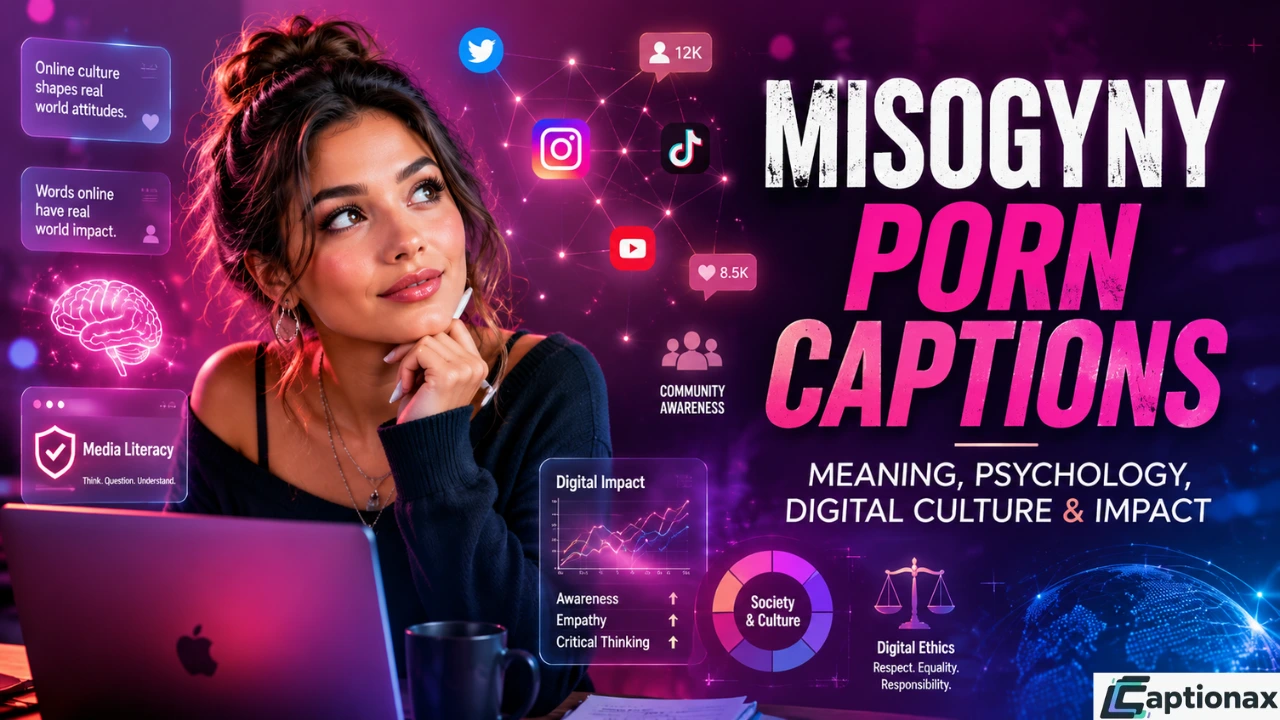
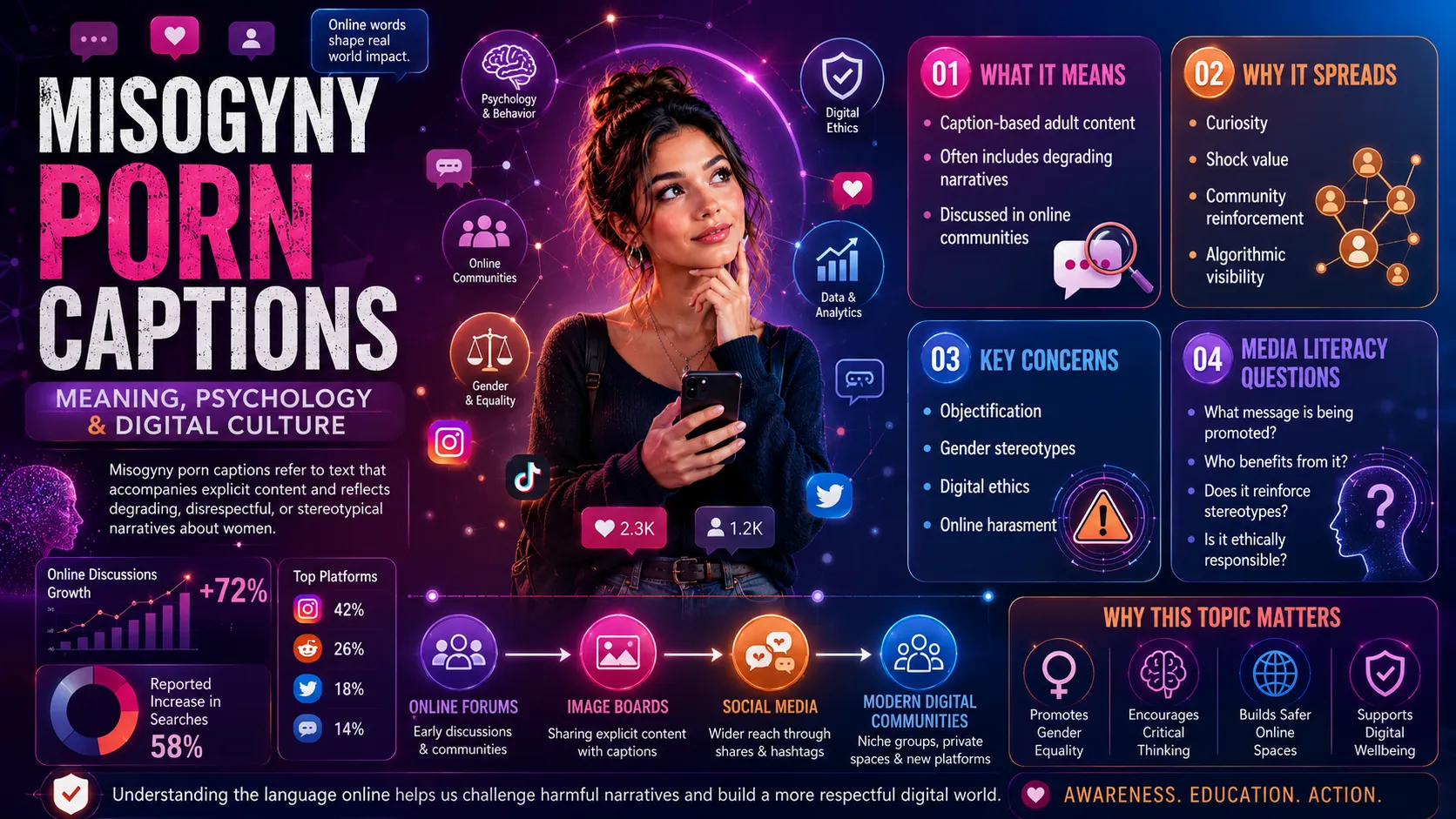
The phrase “misogyny porn captions” refers to a niche category of online caption-based Adult content that combines sexual imagery with text promoting degrading, sexist, or hostile attitudes toward women.
While the content exists within certain online communities and fetish spaces, understanding it requires more than simply viewing examples. It involves examining digital culture, psychology, media influence, gender stereotypes, consent, and the broader social consequences of online narratives.
This guide explores the topic from an educational and research-oriented perspective.
What Are Misogynistic Porn Captions?
Misogyny porn captions are image-and-text combinations that present women in degrading, objectifying, or stereotypical ways.
The text often:
- Reinforces gender stereotypes
- Promotes power imbalances
- Uses humiliation themes
- Frames women as inferior or submissive
- Blurs fantasy and ideology
Not all users engage with such content for the same reasons. Some view it as fantasy-based material, while others may participate in communities where these narratives become normalized.
Why Has This Content Become Popular Online?
Several factors contribute to its visibility:
Accessibility
Caption generators and image-editing tools make creation easy.
Community Reinforcement
Online groups can amplify specific themes and narratives.
Shock Value
Controversial content often attracts attention and engagement.
Algorithmic Distribution
Platforms sometimes recommend highly engaging content regardless of quality.
Niche Fetish Interests
Some consumers view the material through a fantasy lens rather than as a reflection of personal beliefs.
The History of Caption-Based Adult Content
Caption-based content emerged through:
- Early internet forums
- Image boards
- Adult community websites
- Meme culture
- User-generated content platforms
Over time, captions evolved from humorous image macros into highly specialized niches addressing specific fantasies and interests.
How Misogyny Appears in Pornography and Online Communities
Common patterns include:
Objectification
Women are portrayed primarily as objects of sexual gratification.
Dehumanization
Language that reduces individuality and agency.
Gender Hierarchies
Narratives emphasizing male dominance.
Stereotyping
Reinforcement of simplistic and harmful assumptions.
Community Normalization
Repeated exposure can make extreme ideas appear commonplace.
Psychological Factors Behind Consumption
Researchers often examine several motivations:
Fantasy Exploration
People may consume content disconnected from real-world behavior.
Taboo Attraction
Forbidden themes can generate curiosity.
Identity and Belonging
Online communities provide social validation.
Escapism
Users may engage with fictional narratives for emotional or psychological escape.
Novelty Seeking
Extreme content can trigger stronger emotional responses.
The Difference Between Fantasy, Fetish, and Real-World Attitudes
This distinction is critical.
Fantasy
Imagined scenarios not intended for real-life behavior.
Fetish
Specific interests or preferences within consensual contexts.
Real-World Attitudes
Beliefs that influence the actual treatment of others.
Experts frequently emphasize that fantasy content does not automatically predict behavior. However, repeated exposure to harmful narratives can influence perceptions and attitudes in some individuals.
Academic Research on Misogyny and Pornography
Researchers continue studying:
- Gender representation
- Sexual scripts
- Media influence
- Attitude formation
- Online radicalization
- Digital subcultures
Findings often suggest that media can shape expectations and reinforce existing biases, particularly when consumed without critical analysis.
How Online Platforms Moderate Harmful Content
Major platforms used:
| Moderation Method | Purpose |
| Automated Detection | Identify harmful content |
| Human Review | Context evaluation |
| Community Reporting | User feedback |
| Policy Enforcement | Rule application |
| Account Restrictions | Limit repeat violations |
Challenges remain because context, satire, fantasy, and harmful advocacy can be difficult to distinguish.
Effects on Women and Marginalized Groups
Potential concerns include:
- Reinforcement of harmful stereotypes
- Increased normalization of sexism
- Reduced empathy
- Online harassment
- Hostile digital environments
The impact varies across individuals and communities.
Ethical Concerns and Criticisms
Critics argue that such content may:
- Normalize discrimination
- Promote harmful attitudes
- Blur boundaries between fantasy and ideology
- Encourage objectification
Supporters sometimes argue that fantasy content should remain separate from real-world beliefs.
The debate continues across academic, legal, and cultural contexts.
Media Literacy: How to Analyze Harmful Online Narratives
When evaluating online content, ask:
- What message is being communicated?
- Who benefits from this narrative?
- Does it rely on stereotypes?
- Is consent clearly represented?
- Could repeated exposure influence attitudes?
- Is the content encouraging harm or discrimination?
These questions help users critically assess digital media.
Caption Culture vs. Educational Discussion
Many websites focus exclusively on caption collections.
However, educational resources offer greater value by helping readers:
- Understand context
- Evaluate risks
- Recognize bias
- Improve media literacy
- Analyze online communities critically
This approach aligns more closely with modern search quality standards and user needs.
FAQs:
It generally refers to caption-based adult content that combines sexual imagery with text containing degrading or hostile portrayals of women.
Most users are curious about the meaning, psychology, online communities, or cultural debates surrounding the content.
Not necessarily. Motivations vary widely, and fantasy consumption does not automatically reflect real-world beliefs. However, repeated exposure to harmful narratives may influence attitudes in some cases.
It intersects with pornography, gender representation, ethics, consent, and online culture.
Many platforms moderate content that promotes harassment, hate, exploitation, or harmful stereotypes through a combination of automated and human review systems.
Disclaimer
This article is intended for educational, informational, and media-literacy purposes only. It does not endorse, promote, or encourage misogyny, Harassment, discrimination, or harmful behavior. Readers should approach all online content critically and consider issues of consent, ethics, and respectful representation.